AI Changed Marketing. Then It Changed Again.
When ChatGPT went public in 2022, most marketers used it as an acceleration tool. It helped with brainstorming, rewriting, and turning rough notes into drafts. Not because it was deeply intelligent, but because it was immediate. AI removed friction from the parts of marketing work that slow teams down, and that speed created momentum.
Early on, speed was the entire value proposition. Content takes time to think through, structure, edit, and publish, and AI compressed that cycle. Once that compression became clear, the implication was straightforward: publishing faster meant broader topical coverage, and broader coverage meant more opportunities to rank. That wasn’t speculative thinking — it was simple math.
The first wave of results reinforced that logic. AI-assisted content ranked well enough to prove it wasn’t just a writing assistant, but an output multiplier. The problem was that multipliers only work while they’re scarce. As soon as everyone gained the same ability to publish at scale, the internet filled with content that was technically fine but strategically empty.
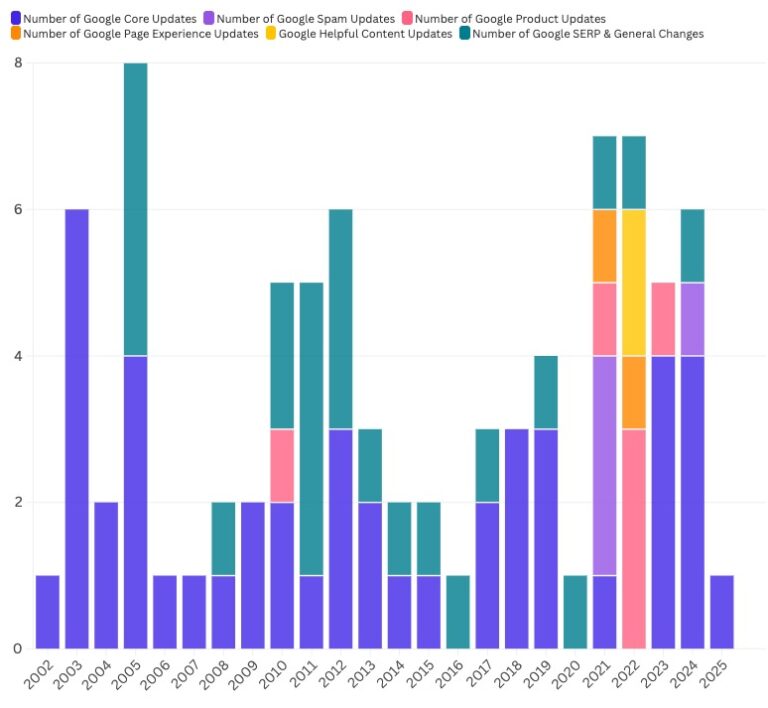
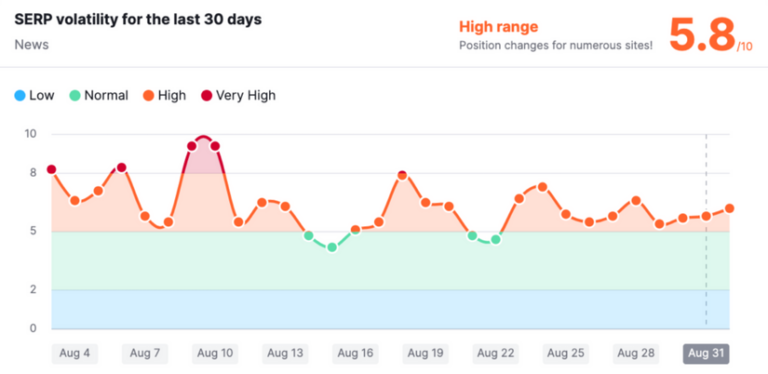
Oct 2024 Update
By late 2024, the cracks were obvious. Rankings became less predictable, Search Console behavior shifted, and the common explanation was that Google had started “detecting AI content.” That diagnosis missed the real issue. Google wasn’t reacting to AI itself — it was reacting to a collapse in signal quality. The problem wasn’t how content was created; it was that much of it added nothing new.
This period marked the start of what became the slop era. Instead of optimizing for usefulness, many teams optimized for survivability. Detection tools, “humanized” prompts, and undetectable-AI promises surged. But avoiding detection was the wrong goal. Even content that passed every detector failed if it felt generic. The real risk wasn’t getting caught using AI — it was publishing work that quietly eroded trust.
What separated effective teams during this phase wasn’t better prompting. It was a shift in how AI was used. The advantage never lived in AI writing; it lived in AI workflow. Treating AI as a content generator capped its value. Treating it as a system for research, synthesis, prioritization, and iteration changed how work actually got done.
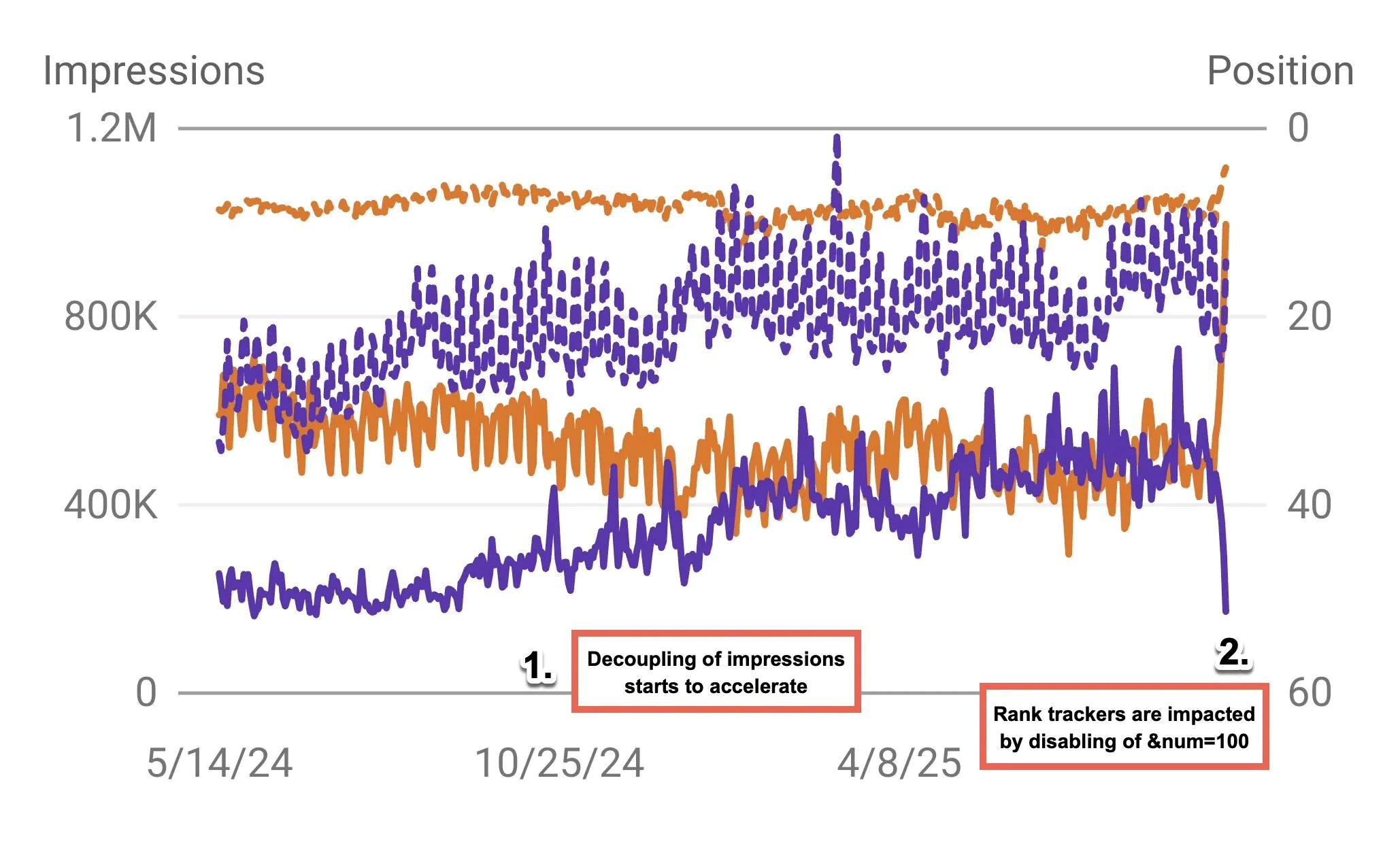
September 2025 Update
By 2025, AI had moved beyond content production and into decision-making leverage. It became part of how marketing teams analyzed datasets, pressure-tested positioning, and mapped customer intent into structured narratives. At scale, this mattered because voice became a moat. AI could generate infinite words, but it couldn’t generate taste, judgment, or restraint.
Search had also changed in a more fundamental way. Visibility was no longer limited to ranking on page one. Increasingly, it meant becoming the source that AI systems summarized, quoted, and relied on. When content was pulled into AI-generated answers, the value wasn’t just traffic — it was authority. And authority came from clarity, structure, and credibility, not volume.
As content became cheaper to produce, content alone lost value. Distribution tightened. Trust became scarce. Brand became the difference between being seen and being chosen. The companies that won weren’t the ones publishing the most. They were the ones publishing the most useful material in the clearest format, backed by real insight and real positioning.
2026 Outlook
Going into 2026, I think the separation becomes impossible to ignore: content volume won’t be a differentiator, and “AI usage” won’t be impressive — it’ll be assumed.
The brands that win will be the ones that build trust at scale by creating fewer, stronger assets that are structured to be cited, referenced, and reused across AI search environments.
If 2024 was the flood and 2025 was the recalibration, 2026 will be the era of filtration: where authority, proof, and clarity determine who gets surfaced, and generic content (even if it’s perfectly written) quietly disappears.