SEO Is Still Great
I started by looking at who was already winning, and why.
Competitors were ranking for high-intent searches that clearly led to revenue. Not “fluffy awareness content.” The searches people type in when they’re already close to making a decision.
The goal wasn’t to reinvent the wheel. The goal was to find the keywords that mattered, then ship better pages than the ones already ranking.
Because a lot of the time, the top results aren’t great. They’re just early.
High-value keywords > random blogs
Once I had the target list, the strategy became obvious.
Stop writing random articles.
Start building repeatable pages around the same patterns that search engines reward: clear structure, straightforward answers, and content that maps to what the buyer actually wants.
This is where most teams lose. They treat every blog like a unique creative project.
I treated it like a system.
The system: repeatable content that ranks easier
Instead of “new idea every week,” I built a repeatable framework that could scale.
Same structure. Same internal link logic. Same intent mapping. Same formatting that makes Google understand the page fast, and makes a human trust it even faster.
The point wasn’t to publish more. The point was to publish better, consistently, with a format that compounds.
That’s how you build a keyword footprint without burning out.
Where AI helped (and where it doesn’t)
AI didn’t replace the strategy.
AI replaced the slow parts.
Outlines got faster. Drafting got faster. Editing cycles got tighter. The workflow sped up without dropping quality.
But the goal was never to flood the internet with generic content. “AI slop” is real, and people can feel it immediately.
So AI was used like an assistant, not a ghostwriter. It helped move faster, but the content still had to sound like a real person, answer the question clearly, and actually earn trust.
December 2025 Update
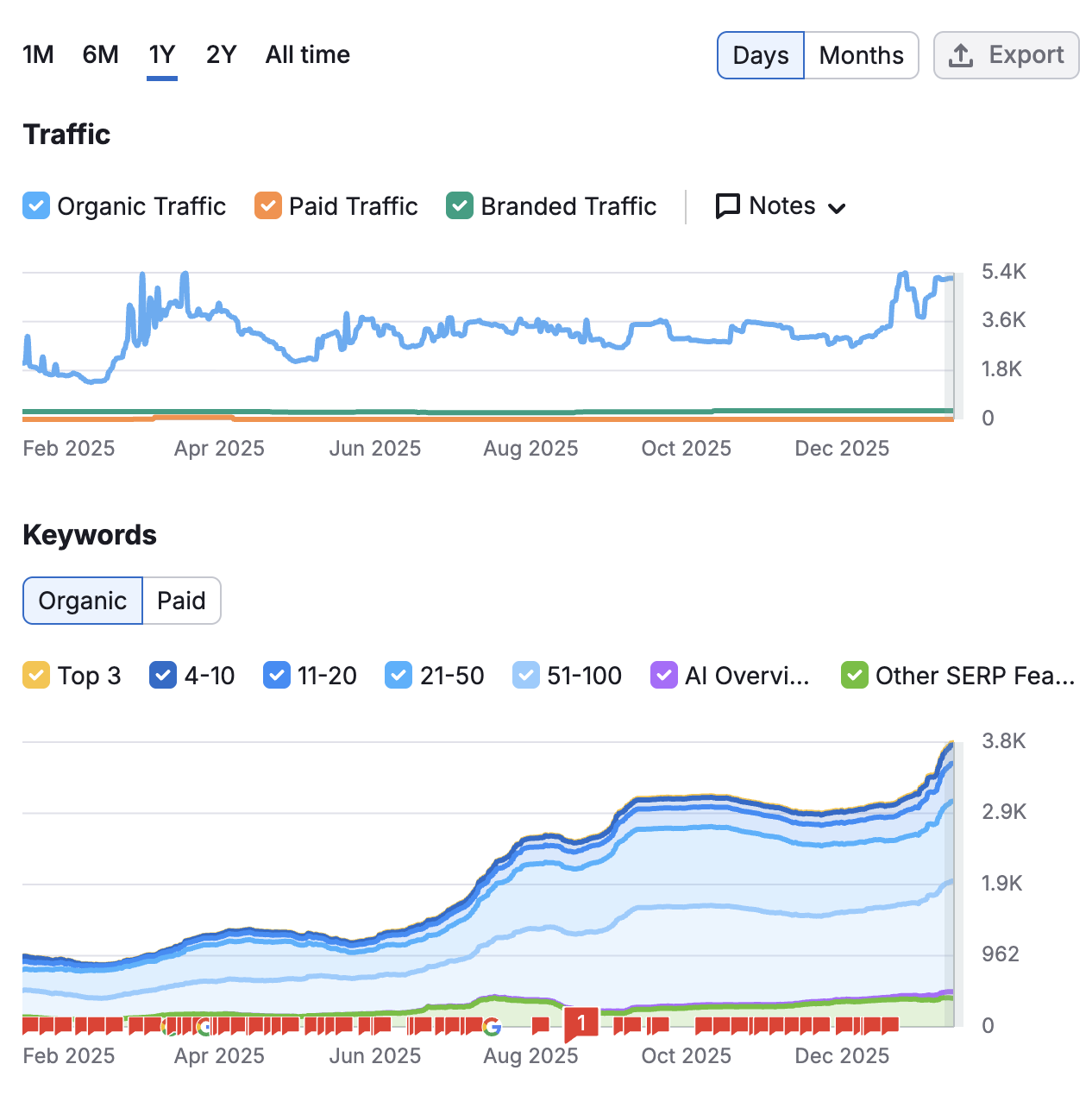
After running this system consistently, the results started compounding the way SEO is supposed to.
Not a spike. Not a one-month bump. Steady improvements month after month.
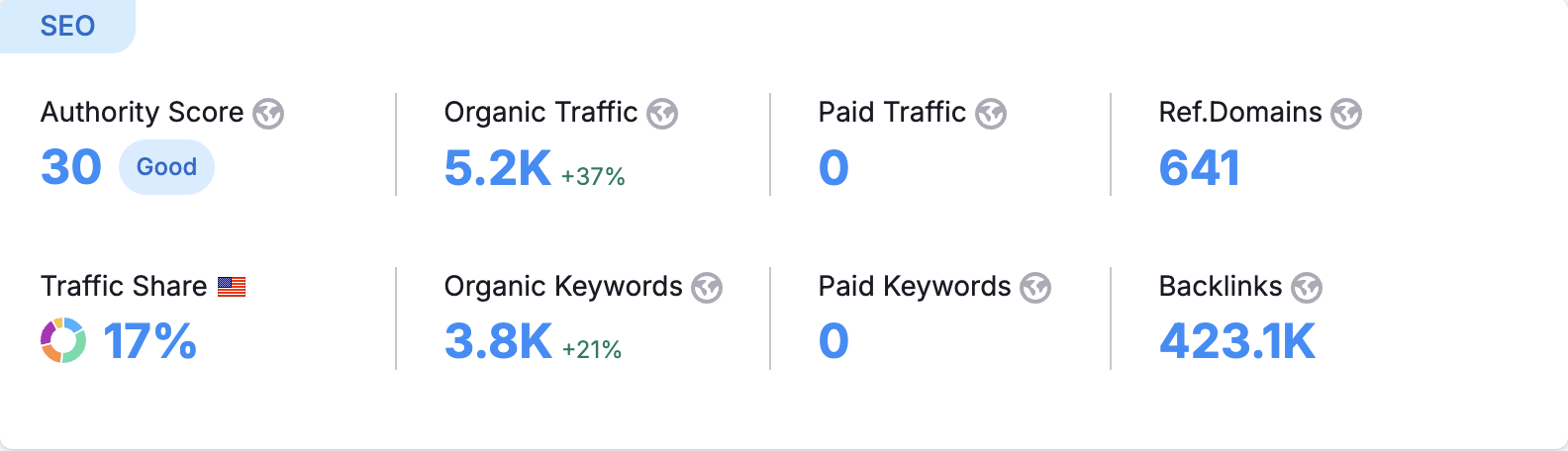
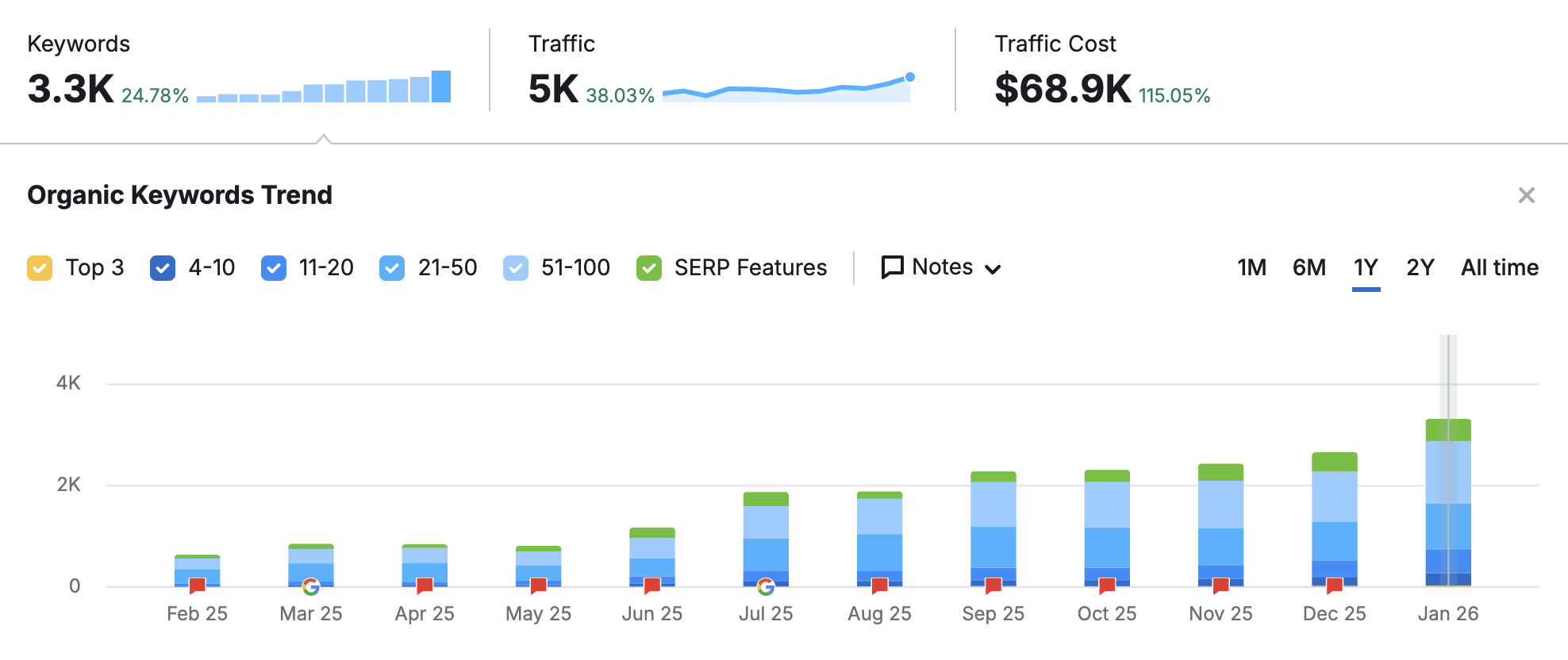
The keyword footprint climbed past 3.3K keywords, and traffic pushed above 5K. The value of that traffic climbed too — $68.9K in traffic cost — which means we weren’t just collecting low-quality clicks.
We were showing up for searches that would’ve been expensive to buy with ads.
And the part I’m most proud of is the shape of the curve. It doesn’t look fragile.
It looks durable.